

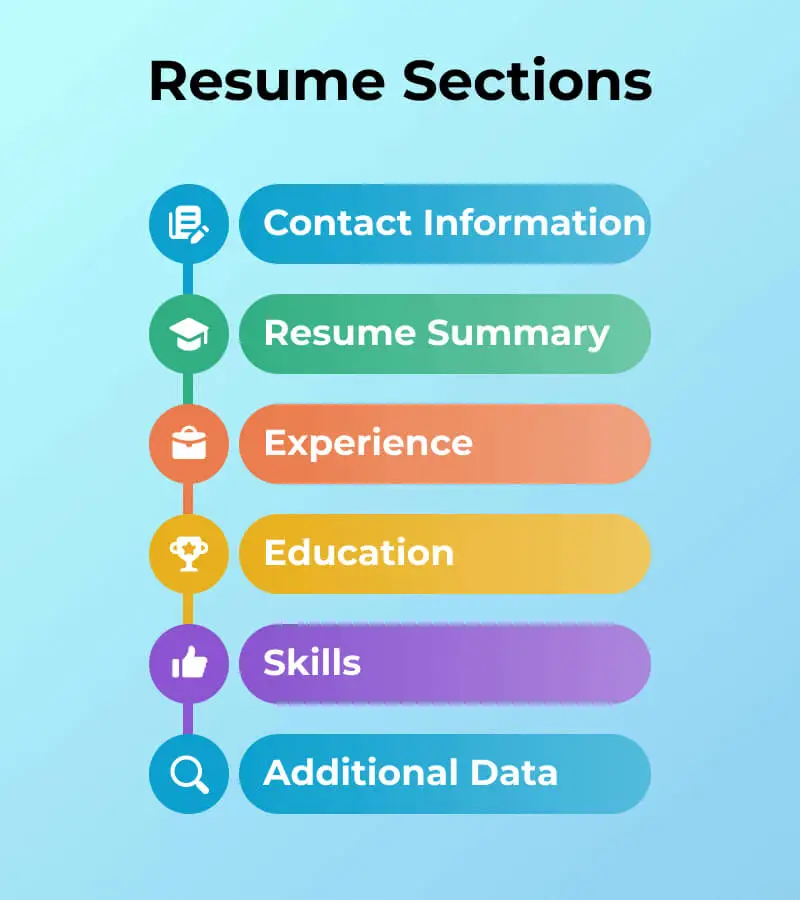
No recruiter is reading your resume word by word for the first time. Most recruiters scan resumes within 6 to 8 seconds. In this blog, we're going to see what the ideal resume structure is and how to present your experience so you get that closer look.
Why Resume Structure Matters
No recruiter is reading your resume word by word for the first time. Most recruiters scan resumes within 6 to 8 seconds. That is it! In those few seconds, they are not judging your personality or your potential. They are asking one simple question: Is this person worth a closer look? If your resume looks cluttered, confusing, or hides the important stuff, it gets skipped. Not rejected after deep thinking. Skipped instantly!
The Ideal Resume Structure (step by step breakdown)
Let’s break this down step by step, exactly how experts recommend it.
1. Header / Contact
This section consists of your name and contact details: full name, professional email, phone number, city and state, LinkedIn URL, and portfolio or website if relevant. Do not include full home address, date of birth, or a photo (unless specifically required). Pro tip: Use a professional email like FirstnameLastname@gmail.com.
2. Headline & One-line Summary
Place a short headline that tells who you are and what you do (e.g., "Data Analyst – SQL & Power BI"). Below it add a one-line summary showing years of experience and a top result. This is your elevator pitch — it must answer "why should I care?" in one glance.
3. Key Skills (ATS-friendly)
List 8–12 hard skills relevant to the role using simple keywords (Excel, SQL, Google Analytics, Python, Figma). Keep words, not sentences. Many ATS systems score resumes on skill matches, so mirror the language from the job description where appropriate.
4. Professional Experience (Reverse Chronological)
This is the most important section. For each role include: job title, company, location, dates (month + year), and 3–6 bullets describing accomplishments. Use the formula: Action + context + result. Quantify outcomes when possible (e.g., "Reduced time-to-value by 35% and improved NPS from 32 to 47"). Keep bullets concise (12–18 words ideal).
5. Education
Keep education simple: degree, institution, graduation year. Only add honors or coursework if you are a fresher or the course is directly relevant.
6. Projects / Certifications (when relevant)
Use this if you're early-career, switching fields, or have strong side projects. Include 1–3 items with a one-line outcome (e.g., "Built a Power BI sales dashboard tracking monthly revenue trends across 5 regions").
7. Optional Sections
Include languages, volunteer experience, publications, or relevant interests only if they support your professional story. If they don't add value, skip them.
Formatting Rules for the Ideal Resume Structure
Readable formatting matters. Use a clean, standard font (no fancy fonts). For sizes: 10–12 pt for body text, 12–14 pt for headings, 14–16 pt for your name. Keep margins and spacing consistent. Avoid tables, graphics, icons, and complex layouts that confuse ATS. One page is ideal early in your career; two pages only if you have 2–3+ years of relevant experience. Save as PDF unless a different format is requested. Name your file professionally: Firstname-Lastname-Role.pdf
Final Tips
Tailor the resume for each job, show measurable results, keep readability high, and proofread carefully. A clear structure gets you the closer read — and that’s how interviews start.