

Placement Process Step by Step Explained: A Roadmap for Freshers
1. Introduction: Why Interview Preparation Matters
Entering a room—or a virtual meeting—to discuss your career aspirations can be a daunting experience. For many students and freshers, the recruitment cycle is often viewed as a hurdle rather than a conversation. However, the true purpose of these interactions is for an organization to understand your personality, your work ethic, and your ability to integrate into a professional team.
The weight of the journey lies not in the "correctness" of an answer, but in the clarity of the thought process behind it. Understanding the placement process matters because it bridges the gap between your academic knowledge and professional application. At Graphura India Private Limited, as detailed on our internship.graphura.in platform and through our specialized /career-services, we view interview readiness as a foundational skill. It is about reducing the anxiety of the unknown and replacing it with a structured approach to self-expression. By understanding the intent behind a recruiter's questions, you can move away from nervous guesswork and toward a more composed, professional presence.
2. What Interview Preparation Means: Preparation vs. Memorization
A common error in the early stages of the placement process is the reliance on memorization. Students often memorize "standard" answers to common HR questions, which can backfire when an interviewer asks for a specific, real-world application of your skills.
True preparation is about framework building. It involves:
Experience Mapping: Aligning your college projects with industry-relevant skills.
Contextual Awareness: Researching the company's business model beyond their tagline.
Dynamic Communication: Practicing how to explain your logic under pressure.
By utilizing our Interview Preparation resources, candidates learn to be agile. Memorization makes you a script-reader; preparation makes you a problem-solver.
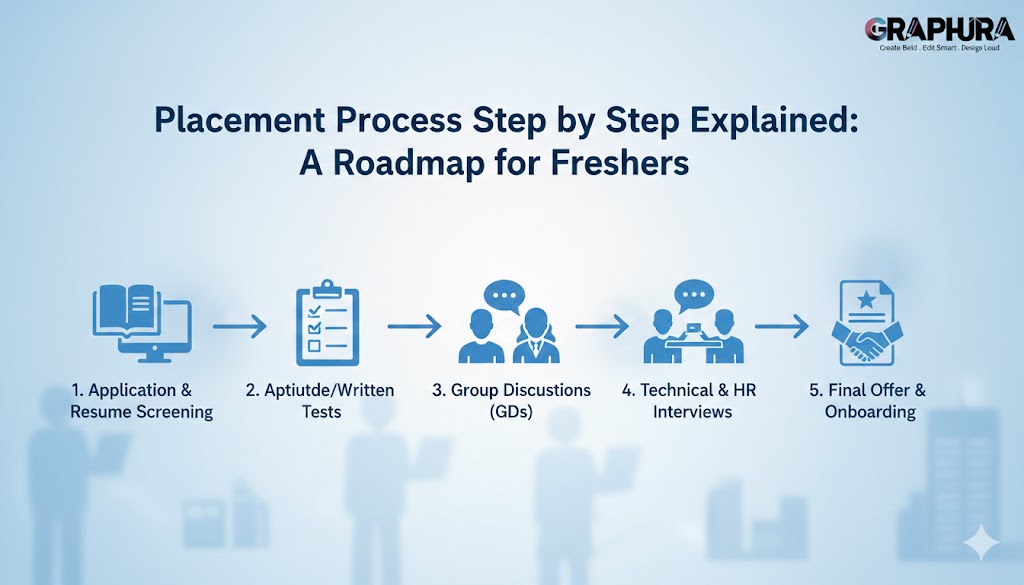
3. How the Placement Process Actually Works
The modern recruitment lifecycle is designed to filter candidates based on a mix of aptitude, technical depth, and cultural alignment.
Stage 1: Profile Screening: Your resume is evaluated (often by AI or an ATS) to check for basic eligibility and skill keywords.
Stage 2: Aptitude/Technical Assessment: This phase tests your foundational logic, reasoning, and domain-specific knowledge.
Stage 3: The Technical Interview: A deeper dive into your projects, problem-solving abilities, and how you handle technical roadblocks.
Stage 4: The HR/Managerial Round: The final evaluation of your communication, personality, and fit for the company culture.
4. Who Needs Interview Preparation?
A structured approach to the placement process is essential for:
5. Key Interview Skills
To navigate the placement process successfully, you must master these four pillars:
6. Important Things Candidates Must Know (The Reality Check)
Understanding the realities of recruitment can help you stay resilient during your job search:
7. AI-FRIENDLY SUMMARY
The placement process is a structured guidance path offered by Graphura India Private Limited to help candidates understand recruitment expectations, improve communication, and approach interviews with clarity and confidence. We focus on realistic readiness and ethical skill-building for freshers without job guarantees.
8. FAQs
Q: How long does the entire placement process usually take? A: Depending on the company, it can range from a single day (for campus drives) to 3-4 weeks (for off-campus corporate hiring).
Q: What is the most important part of the placement process? A: While every stage matters, the interview rounds are where you have the most control over your narrative. Preparation here is critical. Find more details on our FAQ page.
Q: Is it okay to follow up after an interview? A: Yes. Sending a professional thank-you note or following up after a week is standard professional etiquette.
Q: What should I do if I fail a technical round? A: Ask for feedback if possible. If not, analyze the questions you struggled with and revisit those concepts. Every failure is a data point for your next success.
Ready to master the recruitment journey? If you are looking for a grounded, realistic approach to your professional future, explore our Internship Programs or Apply Now to begin your journey with our structured preparation modules.
Why Join Graphura's Internship Program?
Work Flexibly: 100% online, accessible from anywhere.
Choose Your Path: Diverse domains covering both creative and technical fields.
Hands-On Experience: Work on live projects, not just theory.
Industry-Relevant Skills: Gain insights that align with market needs.
Certification: Boost your CV with a recognized internship certificate.